To request a free catalog, please click here or call 1-800-637-6724.
Tuesday, June 17, 2008
New ArtScroll Catalog Available
In celebration of Shavua HaSefer (Book Week) which occurs in June, ArtScroll has published a new catalog, featuring same day shipping on over 1,000 items in stock. All books and audio featured in this new catalog are available at 20% off till June 25 '08.


Monday, June 16, 2008
Inside ArtScroll - Week of June 16 08
The conclusion of the Yad Avraham Mishnah Series draws near with the publication of Mishnah Niddah. Only a few volumes remain to complete Seder Tahoros, the final Seder in the project. The translation, elucidation, and commentary contained in the series is unparalleled. The completed Sedarim of Zeraim, Moed, Nezikin, Nashim, and Kodashim are all available now in both the full-size and the new pocket-size, boxed sets of Mishnayos. And right now – during the June 20% off sale – is the perfect time to update your Mishnah library with this and other volumes.
The Editor’s View is an eye-opening look at our life, our beliefs, and ourselves as reflected through the eyes of Rabbi Pinchos Lipshutz, editor of the very popular Yated Neeman weekly.Comprising a collection of more than fifty incisive and illuminating essays, this book probes current events, history, and our everyday lives to help us understand the story behind the story – and the important lessons within the story. A student of many leading Torah giants and an original thinker,Rabbi Lipshutz’s perspective on contemporary issues combines the Torah wisdom of his mentors with cogent analysis. It’s all here in The Editor’s View.
Thursday, June 12, 2008
A Teenage Girl, a Grim Diagnosis, and a Storybook Ending
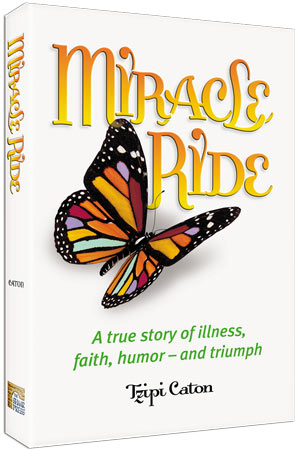
Reviewed by Ariella Marcus
Miracle Ride begins in 2003. Tzipi remembers, “The first thing that went through my mind was that I must’ve had a brick in my neck. It was Thursday, at the end of first period, and I was bending down to get my siddur, when suddenly it hurt to move my head. Instinctively, my hands went to my neck and I felt two big bumps I’d never felt before.”
Tzipi’s spirited attitude, which suffuses the book, emerges in the first chapter when she quips, “Eleventh grade was so not a picnic.” She describes her joy at being a Jewish girl – until she hit a hard wall of realization. “I was a JAP. I was the girl who loved everything about being a girl. The clothing, the shoes, the makeup, the shoes, the accessories, the shoes, the jewelry, the shoes, doing my long dark hair, the shoes, and did I mention the shoes? My days as a JAP seemed to be changing into my days as a JACP. A Jewish American Princess turning into a Jewish American Cancer Patient.”
The story races rollercoaster-like through the shock of diagnosis, the search for the best medical care, the awkward agonies of chemotherapy, the struggle for normalcy, the curious fraternity shared by fellow cancer patients, and a family and community that prays, cares, and wonders why. After many poignant twists and turns, the book hurtles toward an amazing-but-true story book ending which left this reviewer breathless with gratitude.
Miracle Ride is one of those once-in-a-decade books that pole-vaulted to the top of my recommended reading stack. Its particular Jewish cultural and religious setting is a stimulating backdrop for its universal themes of hope, courage, faith, and determination. I got very attached to the personalities showcased in Tzipi’s journal. They enlightened my mind and deeply touched my heart. More than an entertaining human drama, Miracle Ride solicits action. When I reluctantly finished it, I knew I had to carry its impact into my world to make something better, to brighten someone’s day, to improve myself as a caring person.
There’s a compassionate spin-off developing with the publication of Miracle Ride. Friends, family, friends of friends and even strangers are committing resources to make this book available as an encouragement to cancer patients across the country. There is also hope that the book will generate more interest and support for Dr. Michael Harris’ vital work at Tomorrow’s Children’s Institute.
It’s been five years since Tzipi Caton’s miracle ride began. Today at 21, she’s a remarkable soul with a unique gift to reframe personal hardships into a storyline that can literally shift a reader’s view of what’s really important in life. She’s anything but shy in sharing the lessons of her recovery from cancer. Therefore, I predict we’ll see more published musings from this talented young author.
Hear Tzipi Caton's radio interview. See the audio section in the left column of this page.
View Table of Contents and Sample Pages here.
Visit Tzipi Caton's blog here.
Reviewer: Ariella.Marcus@gmail.com
Columnist’s New Book Serves Up Motherhood on Wry
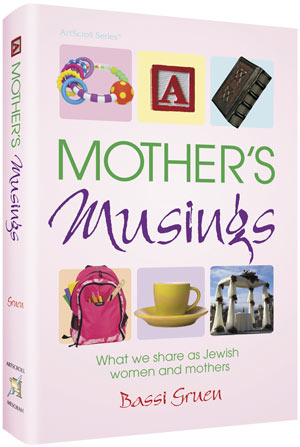
Noted columnist Bassi Gruen’s just-published A Mother’s Musings is a delightful read. In a world of intimidating supermoms, here’s a book about a real woman dealing with the real challenges we all face. She has her doubts and her difficult days; she battles whiney toddlers and broken washing machines. And she doesn’t always win. She admits to it all with refreshing candor. Readers will likely find themselves here.
This is no kvetch journal. Far from it. Bassi takes us up a step or three. Each piece offers food for thought, an idea, a new interpretation of an old reality. Bassi mines motherhood for all the inspiration it has to offer. And she finds it right there amidst the dirty dishes and mismatched socks. Her pieces are anecdotal; she shares not just the events but also the inner conversations they sparked, lending a depth to the mundane, hinting to the sublime hidden within our lives.
A Mother’s Musings is divided according to the months of the year. Each month features a theme, with several vignettes loosely related to the theme. In this way, Bassi takes us through the year to embrace the ecstasy of Succos, the tragedy of Tisha B’av, the renewal of Pesach. But most of the book, like most of our lives, comprises the regular days - PTA meetings, work deadlines, picnics in the park - the thousand and one threads of activity that constitute life’s ordinariness.
There are some fictional pieces interspersed as well, allowing us to explore the inner worlds of other mothers. In her stylized, multi-generational pieces, Bassi gives us a snapshot of Yom Tov in the lives of three women living in different countries, different centuries, yet united by the essence of the day.
This book doesn’t easily yield to being labeled. It’s a collection of stories, yes, and while most are true, some morph into engaging fiction. It is light reading for certain, liberally spiced with wry humor, but many of the ideas leave you in a reflective posture. There are numerous chinuch concepts which are subtly implied through the stories. And while A Mother’s Musings is the story of a youngish mother, single girls, brand new mothers, great-grandmothers, and even men will also find it inspiring.
Here’s one new book not to miss. A Mother’s Musings will reward you with a whole new appreciation for motherhood.
See the Table of Contents and Sample Pages here.
Order A Mother's Musings here.
About the author: Bassi Gruen is a licensed social worker, an editor, and a freelance writer. She's published hundreds of articles in numerous Jewish publications. Bassi lives with her husband, her children, and her dreams in Beitar Illit.
Author Interview: Project Y.E.S. Director Publishes Straight Talk Book on Parenting
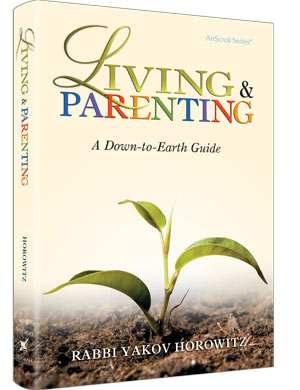
Rabbi Yakov Horowitz is the dean of Yeshiva Darchei Noam in Monsey and the director of the Agudath Israel's Project Y.E.S. (Youth Educational Services). He recently published Living & Parenting: A Down-to-Earth Guide, his first book with ArtScroll Mesorah Publications, which features some of his best, most pragmatic solutions for helping all of today's Jewish youth – mainstream and at-risk – maximize their potential. For over 25 years, he has specialized in reaching out to marginalized Jewish youth and assisting their parents in raising them effectively. His results have been significant and some former students have admitted "this rabbi saved my life". He spoke to broadcaster Gavriel Aryeh Sanders in this exclusive first-person interview.
GS: Rabbi Horowitz, every book has a process of germination. What was yours for Living & Parenting?
RYH: It wasn’t so sophisticated, actually. I've published numerous articles over the years on the subjects of parenting, education and dealing with pre-risk/at-risk youth. I felt that presenting the most practical ones in a single volume would help parents raise their children more effectively.
GS: What’s the meaning behind the title of "Living & Parenting"?
RYH: Parenting is really a reflection of our own lives, as all-too-often, the challenges that we face with our children are really related to issues that we face as adults. I wanted to address the bigger picture and help parents, along with educators, improve their quality of life while equally helping them help their kids do the same.
This book is all about helping parents think outside the box and develop a multitude of approaches and solutions to child rearing. Using a tool analogy, if all you have is a hammer, then everything looks like a nail. My goal is to give students, parents, and teachers more tools to manage their lives better.
GS: You started out at 22 years old teaching a weaker class of eighth grade boys. Did you know what you were getting into?
RYH: Colleagues said I'd be pigeon-holing myself, that I'd never get a strong class. But the naiveté of my youth worked to my benefit. I believed I could do it. More importantly, I believed the kids themselves could rise to my level of expectation. It often took some individualized and unique approaches, but they were often effective with children who had never previously succeeded in school.
GS: How so?
RYH: Rabbi Abraham Twerski told me years ago that spiritual health is invariably linked to healthy self-esteem and conversely that spiritual deficiency was linked to weak self-esteem. Poorly performing students tend to have pretty low self-esteem; they don't easily trust authority figures, either. I took the approach of empowering my students with incremental successes which affected their educational, social, and familial worlds. I remember one case where I inherited a new class. Nice kids but very passive; lots of quiet desperation in their lives. My first action was to take them outside for a spontaneous half-hour of baseball. That earned me the right to hold their attention on matters of learning.
GS: What is your approach to learning, especially Talmudic skills?
RYH: You said the right word. It's skill-based. Many kids today are in "sink or swim" mode. They don't have a solid foundation in the essentials of understanding language, which is the key to understanding thought and meaning! This applies to Gemara, Chumash, even the Siddur. The bright ones figure it out; the average ones lope along; and the rest sink into a malaise of despair, always running but never catching up until at some point, they start dropping out of the race. Adults may view it as defiance; I view it as exhaustion. I've worked hard to create systematic, consecutive, and success-based steps which have kids smiling to themselves. Early on in our learning, they sense that I believe they can do it. The tipping point occurs when they believe they can do it.
GS: How did you structure Living & Parenting?
RYH: As I said, it's a compilation of articles I've authored over the years. There are 50 chapters, many quite brief. Each was selected for relevance to our contemporary challenges in raising kids to become bnei Torah. Two chapters comprise a checklist to determine if sending your teen to learn in
GS: You mention mastery of the rudiments of Lashon Kodesh. Why?
RYH: Take the study of Chumash, for example. More than ninety percent of all words that appear in Chumash are variations of only 270 root words! There are 26 verbs and 38 nouns that appear in Chumash more than 500 times each! If we were to give children a proper rudimentary understanding of these, teaching them the shorashim (roots) and the shimushim (prefixes, suffixes, etc.) at the time they start to learn Chumash, we'd be giving them the educational training wheels they need to succeed. One cannot master Rashi's commentary without this basic knowledge.
The same thinking applies to Gemara. Think about it. Once boys start learning Gemara, we remove the nekudos, introduce Aramaic, and dive into lengthy exchanges of logical interplay. A little time invested up front in the early learning stages can make all the difference when the student reaches the teen years. I believe it's a significant component of academic self-esteem.
GS: How independent are your methods and views?
RYH: I'm certainly no maverick. My life, work, perspective, and values are based on the best of wise counsel - what we call Daas Torah. The first chapter in Living & Parenting explains what that is and why it's so important. Perhaps what makes me a little different is that I've never become jaded by the job. I still do what I did back when I was 22 in that first eighth grade class - I see students not as they are, but rather as they can become.
GS: Hatzlacha rabbah with the book, the yeshiva, with Project Y.E.S. and with every student and family you help.
RYH: Thank you. Early feedback on the book has been very encouraging. What makes all the time put into the book worthwhile is when I get a note or email from a grateful parent informing me that they are finding child rearing easier now that they have more tools in the box.
View Table of Contents and Sample Pages from Living & Parenting here.
Order the book online here.
Visit Rabbi Horowitz's website here.
Hear Rabbi Horowitz's recent radio interview here.
Two Bestsellers in Translation!
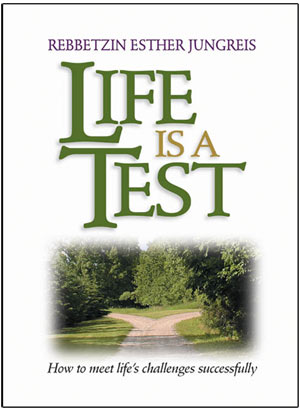
Rebbetzin Esther Jungreis' incredible best seller - Life Is A Test - is in the final stages of translation to Spanish.
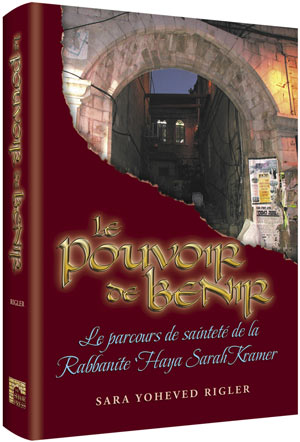
AND - Sara Yoheved Rigler's soul-stirring Holy Woman has been published in French! Now French-speaking Jews in France, North Africa, Canada, and Israel will be enriched from this story of the life and greatness of Rebbetzin Chaya Sara Kramer.
To order Holy Woman in French, click here.
Yet Another Cookbook in the Kosher by Design Series?
 Absolute fact! Susie Fishbein is rapidly finishing up her sixth culinary creation in the most popular kosher cookbook series ever published. Anyone concerned with healthy eating and cooking (that should be most all of us, no?) will love the delicious new recipes in Kosher by Design Lightens Up. Watch this blog for more news on the release of Susie's latest.
By the way, just because Passover is over doesn't mean Passover by Design is a closed cookbook till next year. 130 of the recipes are gluten-free, which makes Passover by Design a source of year round delight for anyone affected by Celiac disease.
To see the complete series of Kosher by Design cookbooks published to date, click here.
Subscribe to:
Posts (Atom)